College of Media and Communication
Discovering your "passion" and experiencing the joy of expanding your own unique world of learning.
At the Department of Communication and Business, you will study "Information" and "Communication" based around their own interests, passions, and areas of expertise.
For example, you can build specialized knowledge and skills in the programming and system development supporting Information and Communication Technology (ICT) as well as experience such cutting-edge technologies as Artificial Intelligence (AI) and cloud computing.[u1.1] You can also engage in hands-on study of design essential to the field of ICT, such as web design, User Interface (UI) design, and graphic design. You can also study English, another communication tool for building deeper mutual understanding on a global scale, through a variety of approaches.
POINT1
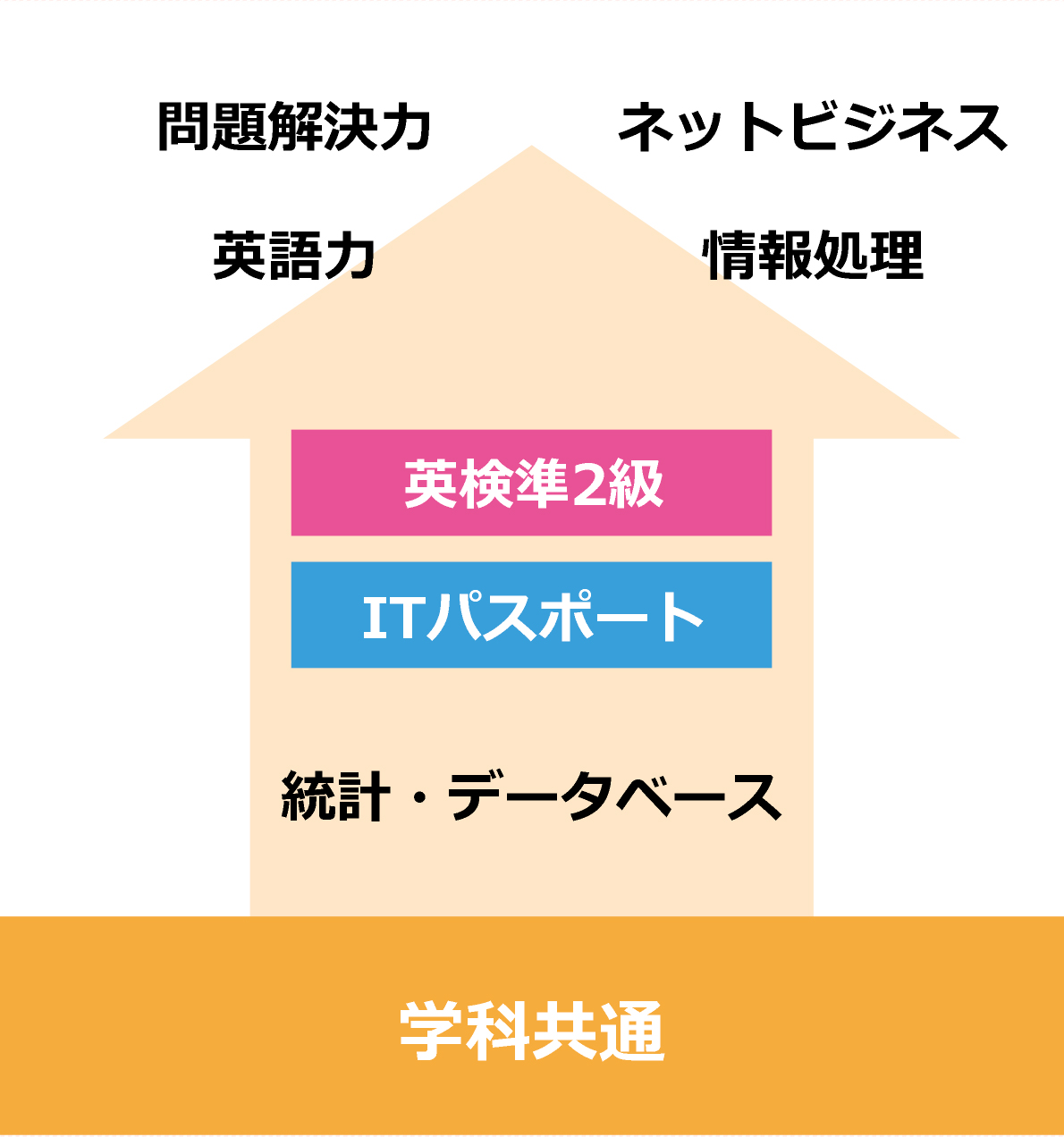
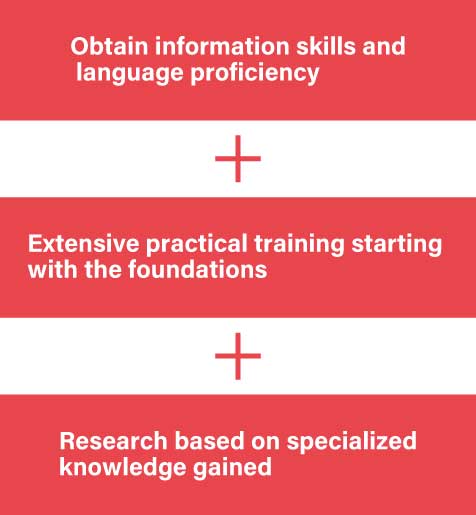
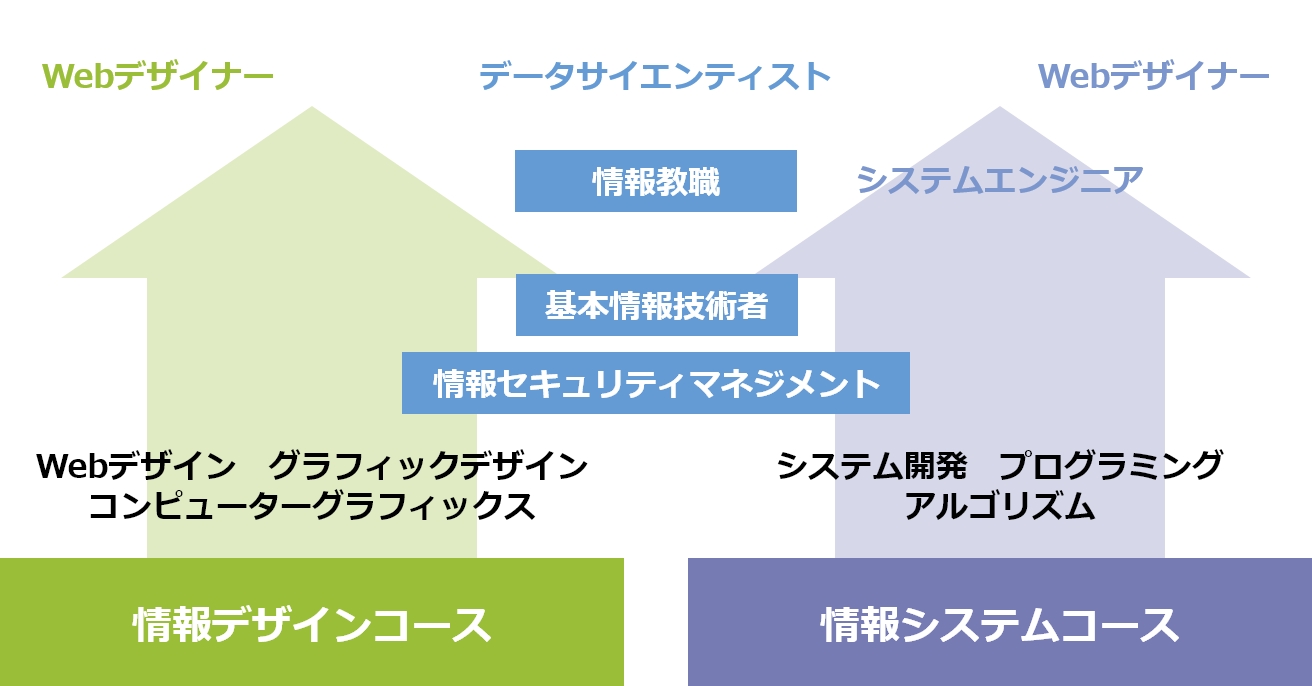
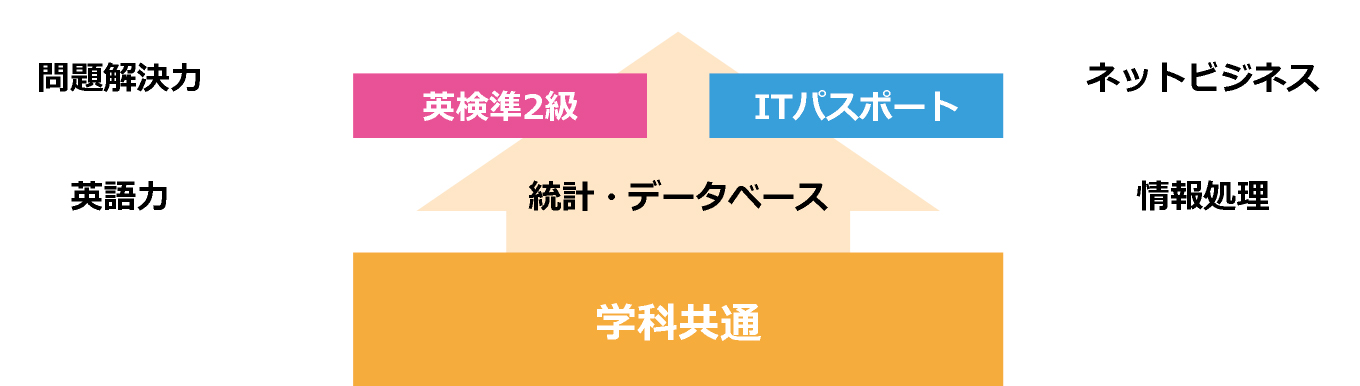
Step up with your own learning style. A curriculum where you can learn ICT and English progressively in stages, from basics to application and practice.
Study either information (ICT) or English intensively, or learn both in a balanced way, as you develop skills that can be used in society and around the world based on your interests, inclinations, and proficiency level.
POINT2
Refine your specialized skills to align with your aspirations and leverage your strengths to develop the fundamental abilities required in the professional world.
Drawing on an understanding of ICT and an interest in different and diverse cultures, you will pursue learning that matches your aspirations as you cultivate the logical thinking and problem-solving skills that form the foundation for putting these to use in society, as well as the capacity for autonomy and collaboration.
POINT3
Hone your employability to make your dreams come true through support that nurtures each student's qualities and potential.
Our faculty members provide meticulous support from admission to graduation. Our system is designed to support each student's growth.
Qualifications and Licenses
Junior High School Teaching License (English)/Senior High School Teaching License (English/Information)/Digital Content Assessor (DCA)/ Museum Curator/Social Welfare Officer (Employment Qualifications)/Child Guidance Worker/ Social Researcher/Child Welfare Officer (Employment Qualifications)*
* Qualifications that can be obtained under certain conditions:
Microsoft Office Specialist (MOS)/IT Passport Exam/Multimedia Certification/ CG Creator Exam/Web Designer Exam/Web Design Skills Test/Information Security Management Exam/Basic Information Technology Engineer Exam/Applied Information Technology Engineer Exam/Practical English Proficiency Test/TOEIC®/TOEFL®/Practical French Proficiency Test/Japanese Language Proficiency Test
Future career paths
【Computer and Web】OA Instructor/PC Instructor/Programmer/System Administrator/System Engineer (SE)/Database Engineer/Application Engineer/ Network Engineer/Network Administrator/Security Engineer/Information Security Administrator/Customer Engineer/Sales Engineer/Support Engineer/Application Designer/Web Art Director/Web Director/Web Designer/Web Programmer (Web Engineer)/Web Producer/Web Content Planner/Web Creator/Online Shop Owner/CG Engineer/CG Creator & Designer/Image Processing Engineer 【Language】 Language Teacher/Interpreter/Tour Guide Interpreter/Translator 【Schools】 Junior High School Teacher (English)/Senior High School Teacher (English/ Information)/School Staff General 【Companies in the ICT/Wholesale/Retail/and Service Industries】 Customer Service and Information/ Trading Work/ etc.
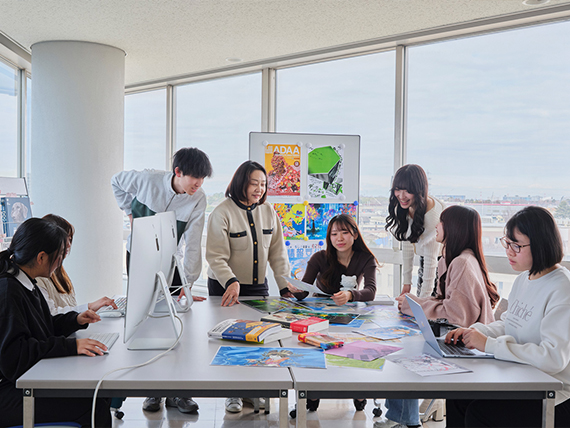
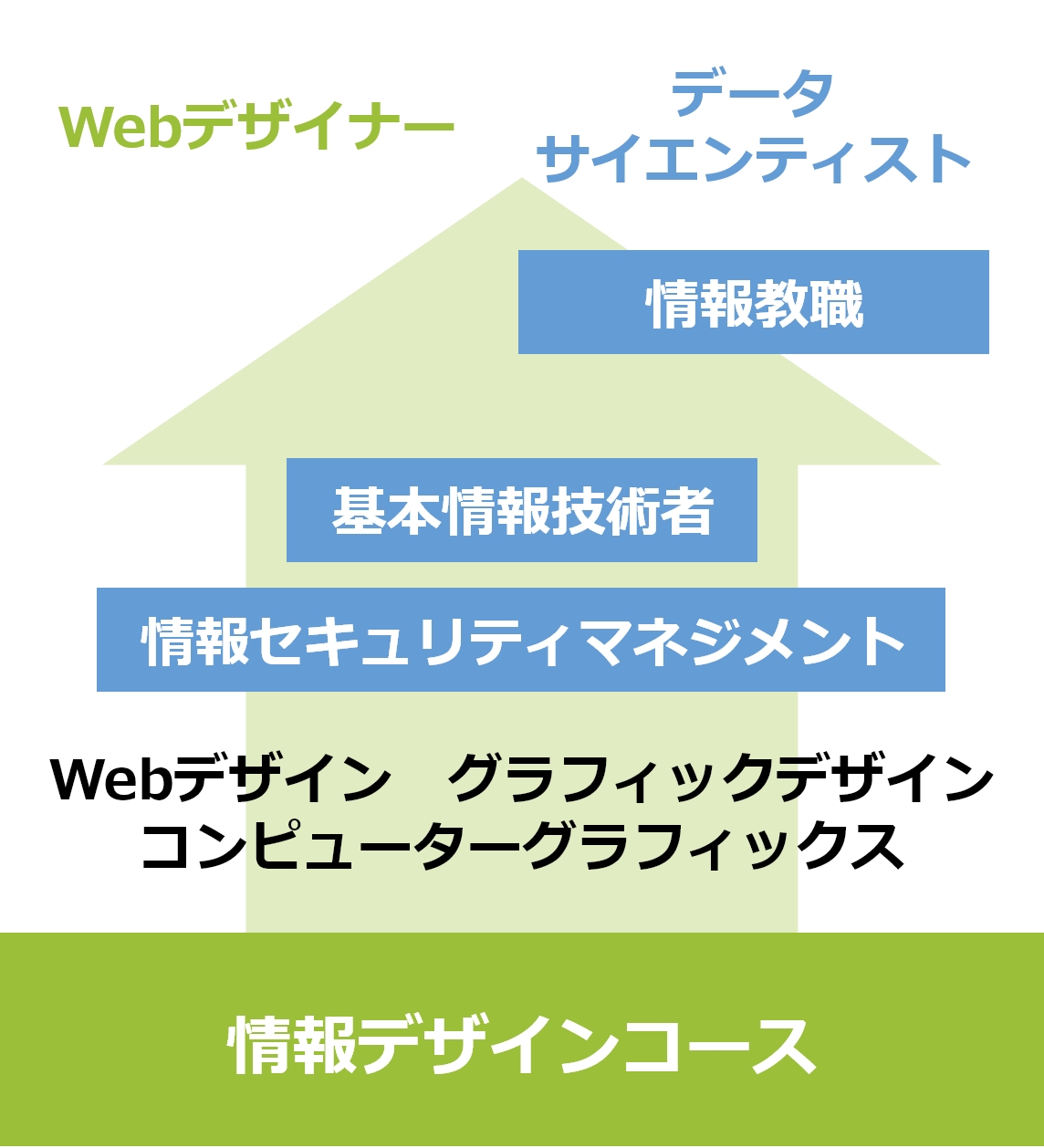
Study web design, Computer Graphics (CG), game production, and more to develop creative skills through hands-on learning. Build a deeper understanding of cutting-edge technologies, such as AI and different ways to use data, and foster the ability to create value by linking design with technology.
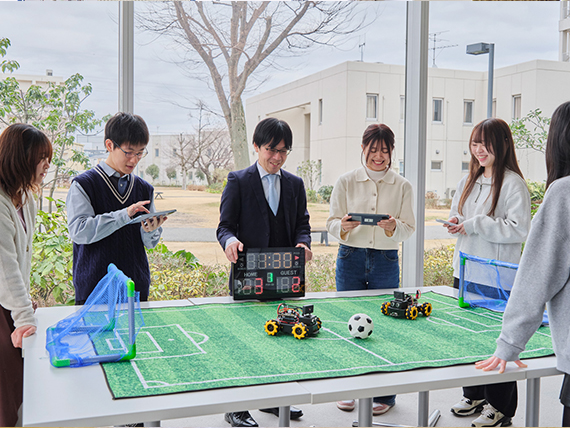
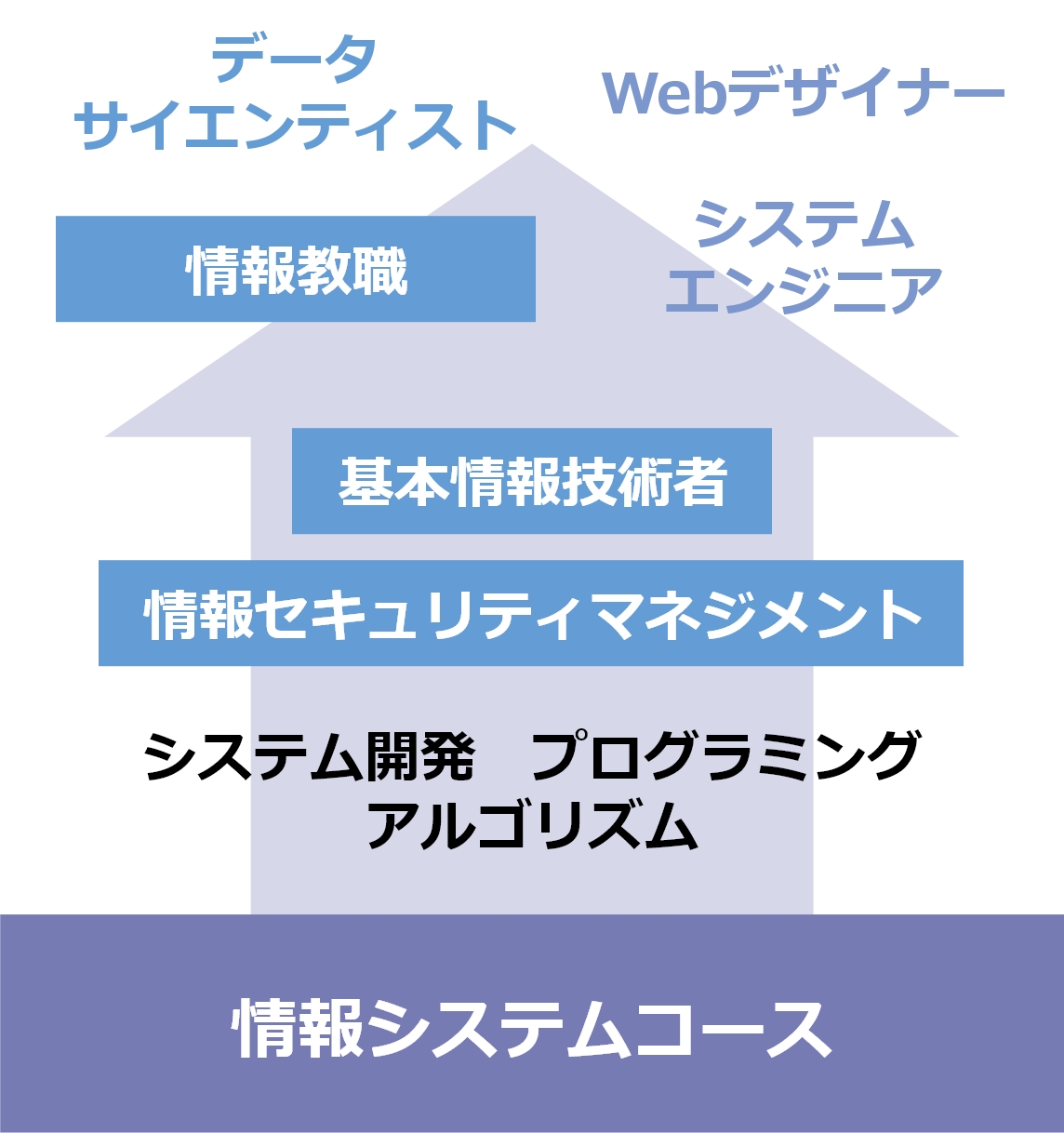
Study through a variety of approaches to build a deeper understanding of the "Information Systems" that uphold society. You can develop skills by studying ICT and programming step by step, gaining hands-on experience in "Craftsmanship" and "System Design".
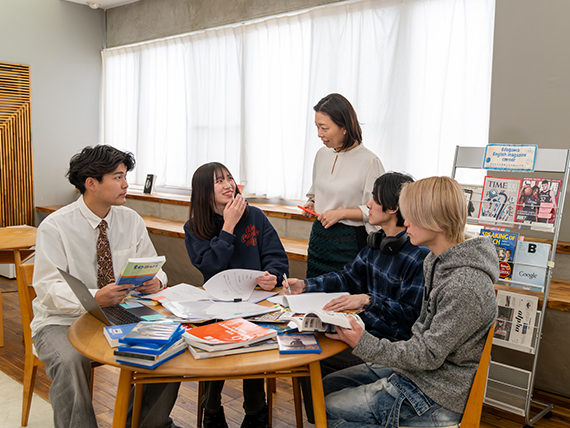
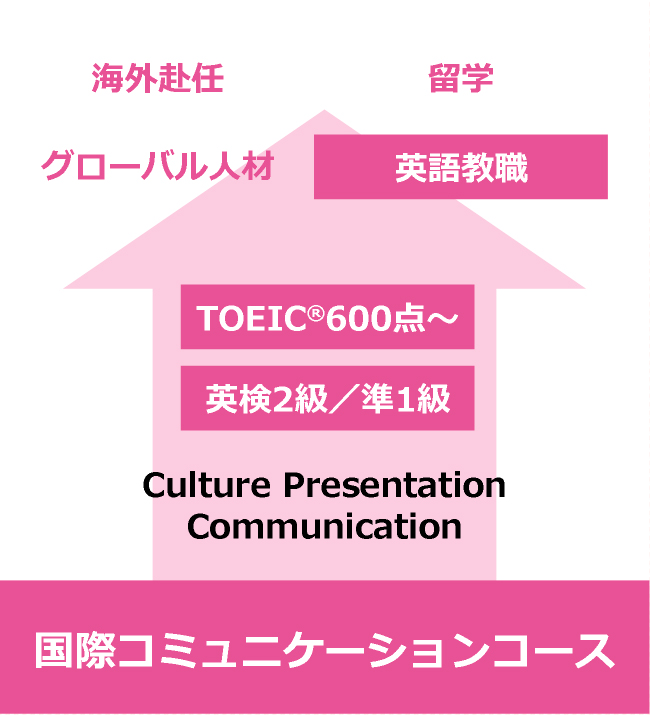
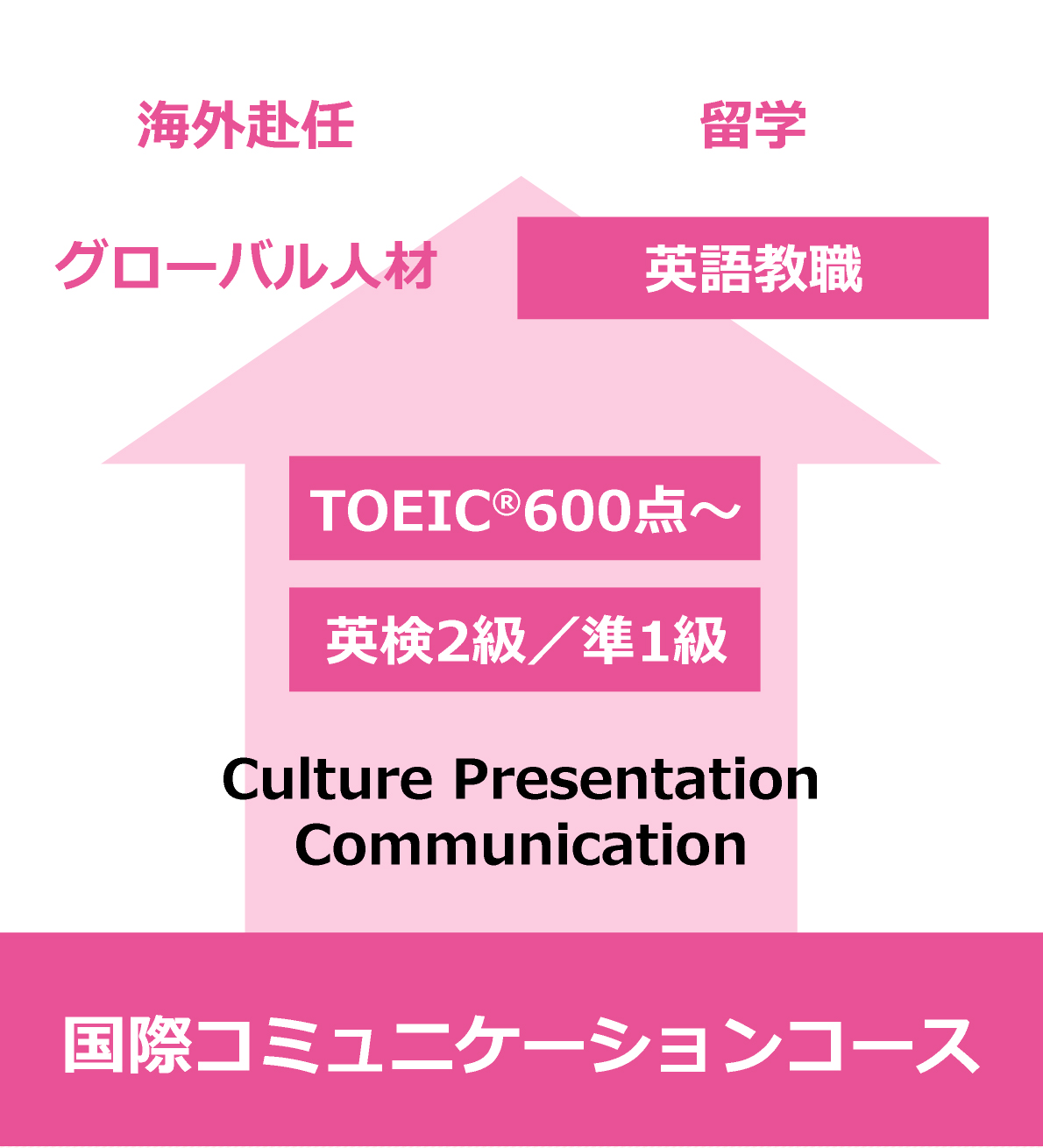
Experience "Japan in the World" and "the World in Japan". This course helps you master language (English) as a tool, build mutual understanding with a greater number of people, and create “Communication on a Global Scale”, including cyber spaces.
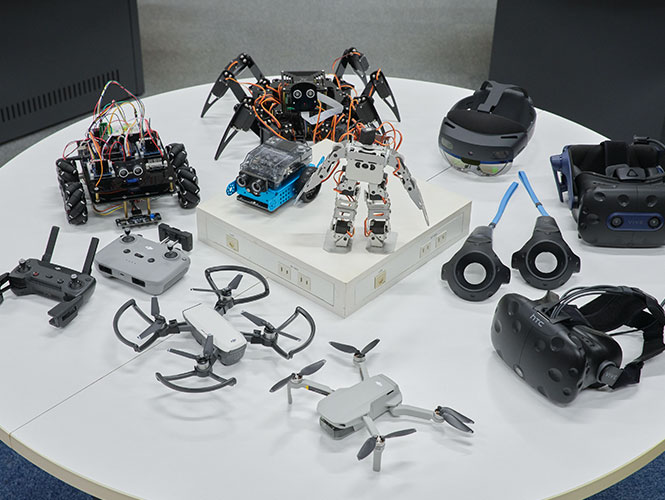
Try operating IT firsthand and making your own creations. Part of the fun is trying new things or attempting things you thought you would be bad at.
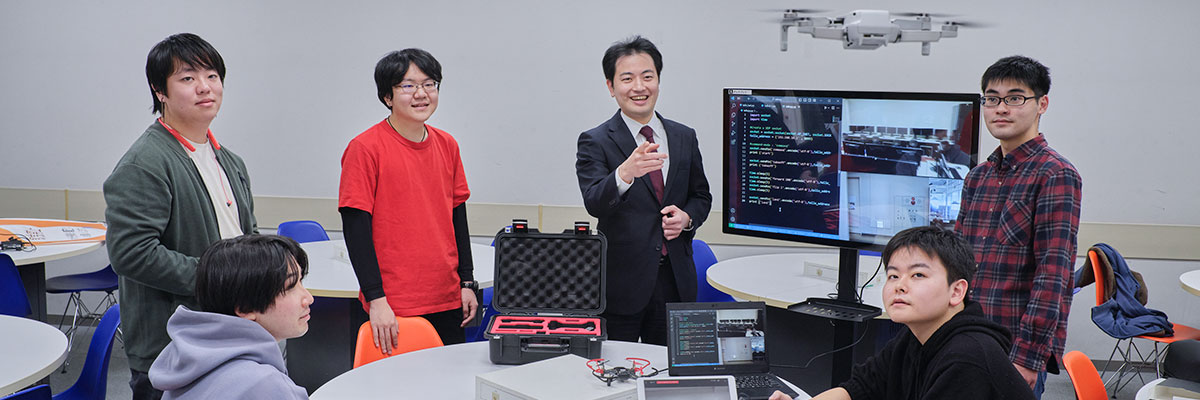
Experience and learn about ICT (information and communication technology) such as AI (artificial intelligence), robots, 3D printers, and VR (virtual reality) that will play an increasingly important role in the societies and industries of the future.
Courses in the Department of Information and Culture are not only lecture-based but also include replete seminars and practicums as well. Experiment with the latest technologies and try using a computer to create CG, program, and analyze data.
This experience also serves as an opportunity to see how university studies and personal interests connect within the real world.
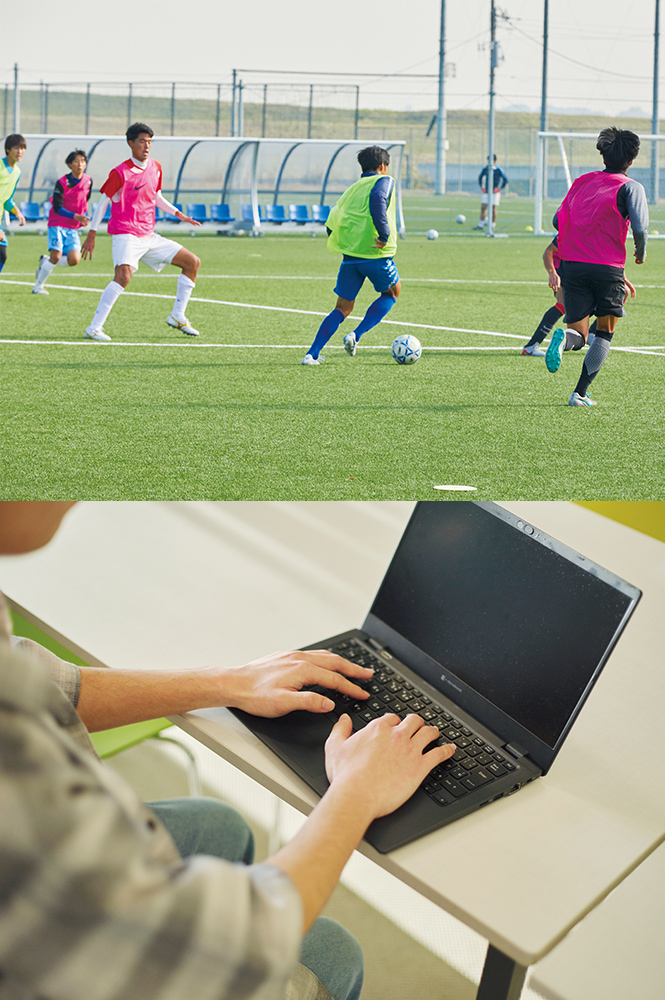
Supporting athlete performance, improving spectator experience, and expanding possibilities for everyday fitness.
This department focuses on the connection between sports and information science. Information science, which researches technologies for data collection, analysis, visualization, and optimization, provides new approaches to identifying issues and making improvements in sports based on multifaceted and objective understandings.
For example, sports analytics, a field that uses wearable devices to collect data and footage of athletes' performances and utilizes AI for analysis to help with training and team strategy development, is increasingly being adopted for professional sports in particular. ICT, which visualizes and shares data by tracking ball movement and player activity, also contributes to the development of new services to make viewing sports even more enjoyable. In everyday life, devices with built-in sensors such as smartwatches have become more accessible, making it easier to use individual biometric data for fitness and health.
Sports is a new field where the use of information science is expanding. By acquiring specialized knowledge and advanced skills in information science, you can expect a career in the sports industry, such as on a sports team, at a sporting goods manufacturer, or at a sports tech company.